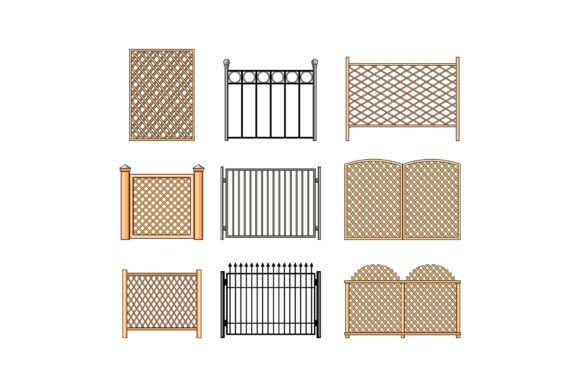
Assortment of Decorative Fences and Gard
When I first encountered the Assortment of Decorative Fences and Gard collection, I wasn't looking at a typeface at all. I was staring at a curated gallery of outdoor architecture—wrought iron gates with scrollwork details, cedar privacy panels with lattice tops, modern horizontal slat screens in powder-coated metal. The collection presents itself as a visual encyclopedia of boundary solutions, each piece photographed against a clean white background that lets every design detail breathe. What strikes me immediately is the range: this isn't a one-note catalog of picket fences. It's a serious design resource spanning ornamental, functional, and purely decorative approaches to outdoor structure.
A Visual Language of Boundaries
Walk through the Assortment of Decorative Fences and Gard and you'll notice something many stock collections miss—personality. Each fence, trellis, and railing carries a distinct design sensibility. There are Victorian-inspired wrought iron panels with elaborate finials and curved pickets that feel theatrical and grand. Next to them, you'll find Scandinavian-influenced horizontal wood slats with minimal hardware, projecting calm and order. Then come the mixed-material pieces: metal frames with wood inserts, chain-link sections softened by climbing vine guides, industrial steel panels with laser-cut geometric patterns.
The collection covers the full spectrum of outdoor architectural elements. Garden fences range from short decorative borders meant to define flower beds to tall privacy screens that completely obscure a yard from neighboring properties. Trellises appear in fan shapes, flat wall-mount designs, and freestanding diamond lattice structures built to support heavy climbing plants like wisteria or clematis. Railings show up in both traditional baluster styles and contemporary cable-rail configurations that suit modern homes. The white background presentation is practical rather than precious—it strips away environmental context so designers, architects, and content creators can evaluate each piece on its own merits.
Where This Collection Actually Gets Used
I've seen collections like the Assortment of Decorative Fences and Gard serve purposes that go well beyond landscaping blogs. Landscape architects reference them during client presentations to establish aesthetic direction. Real estate staging companies pull images for virtual staging projects. Home improvement retailers use them in product catalogs and e-commerce listings. Bloggers covering outdoor living, backyard renovation, and garden design find them invaluable for illustrating articles without hiring a photographer for every possible fence style.
Graphic designers and brand strategists tap into these visuals when working with clients in the outdoor, home improvement, or agricultural space. A fencing contractor building a new website needs imagery that communicates craftsmanship and variety. A garden supply brand developing packaging design might reference specific fence styles to evoke a particular era or aesthetic. Publishers producing books or magazines on landscape architecture, property development, or DIY home improvement use these collections as both reference material and editorial illustration.
Content creators on social media platforms—particularly those focused on home renovation, gardening, or architectural photography—find these assets useful for carousel posts, infographics comparing fence styles, and Pinterest boards that drive traffic to longer-form content. The clean white background makes them especially versatile for drop-in use across different layouts and color schemes without extensive editing.
Design Decisions That Matter
Working with the Assortment of Decorative Fences and Gard effectively comes down to understanding what each style communicates. Ornamental iron fences with scrollwork suggest tradition, formality, and a certain investment-level commitment to curb appeal. They work well for brands positioning themselves around heritage craftsmanship or upscale residential projects. Horizontal wood slat designs read as contemporary, approachable, and environmentally conscious—a natural fit for modern architecture firms, sustainable building companies, or lifestyle brands with a clean aesthetic.
Mixed-material designs occupy interesting middle ground. They suggest practical problem-solving and creative thinking, which makes them strong visual anchors for content targeting DIY enthusiasts or homeowners who want something distinctive without going fully custom. The trellis and railing pieces expand the collection's usefulness further. A garden blog can use a fan-shaped trellis to illustrate a post about vertical gardening. A railing comparison graphic can help a contractor explain the visual difference between traditional and modern balustrade options to a client.
When selecting images from the collection for a specific project, consider the visual weight of each piece. Heavier, more ornate designs command attention and work well as hero images or featured illustrations. Simpler designs with clean lines serve better as supporting visuals, background textures, or elements within a larger layout. The white background means you can easily composite these images into mockups, presentations, and editorial layouts without worrying about color clashes or background removal.
Practical Guidance for Working With This Resource
Start by identifying your project's core message. If you're building a brand identity for a landscaping company, select three to five fence styles that match the company's positioning—maybe two ornamental iron pieces for the premium service tier, two wood privacy designs for the standard offering, and one modern metal piece for the contemporary portfolio. Consistency across your selected images creates cohesion in your visual communication without requiring every piece to look identical.
For editorial and publishing projects, organize your selections by category before laying out pages. Group ornamental fences together, place privacy screens in their own section, and let trellises and railings form their own visual chapters. This structure helps readers navigate the material and gives your publication a professional editorial rhythm that random image placement cannot achieve.
Test how these images interact with your existing design assets. Drop a fence image next to your logo, your brand colors, your typical body copy fonts. Does the ornamental detail compete with your typography, or does it complement it? Simpler fence designs tend to pair well with serif and sans serif typefaces in editorial design layouts, while more elaborate designs might call for bolder display font choices in headlines to maintain visual balance.
Pay attention to orientation and cropping potential. Some fence images in the collection lend themselves to vertical crops—tall iron gates, narrow trellis panels—while others work better in horizontal formats, like long runs of privacy fencing or wide railing sections. Planning your layout around these natural orientations saves time and produces more polished results than forcing awkward crops.
Building Visual Authority With Architectural Elements
What makes the Assortment of Decorative Fences and Gard genuinely useful is its specificity. Generic outdoor stock photography shows fences in context—surrounded by lawns, gardens, and buildings. That context is sometimes helpful, but it's often limiting. The isolated presentation here gives you raw design material. You decide the context. You set the mood. You control the narrative.
For small business owners in the outdoor construction, landscaping, or home improvement space, this kind of visual resource directly supports brand identity development. Instead of relying on the same tired stock photos every competitor uses, you can build a visual library that reflects your actual design sensibility and service range. Pair these architectural images with thoughtful web design, consistent social media graphics, and well-crafted marketing materials, and you create a brand presence that feels both professional and distinctive.
The collection ultimately functions as a design asset for anyone who needs to communicate ideas about outdoor space, property boundaries, garden structure, or architectural detail. Its value lies not in any single image but in the breadth and quality of the assembled whole—a resource built for people who take visual communication seriously and understand that the right image, presented cleanly, does more persuasive work than paragraphs of description ever could.