Old Town Story: Crafting Authentic Brand Narratives
In a digital landscape saturated with sleek, minimalist vectors and overly polished graphics, there is a growing hunger for authenticity. Audiences today crave connection, texture, and a sense of history in the visual content they consume. This shift has led designers and brand strategists to look beyond standard stock imagery and toward assets that tell a story. The Old Town Story collection answers this call, offering a suite of hand-drawn decorative illustrations that bridge the gap between modern elegance and rustic nostalgia.
The Character of Hand-Drawn Authenticity
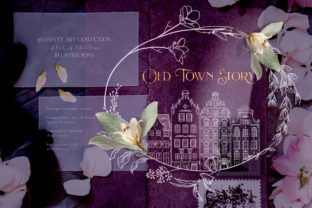
Unlike digital creations that can feel sterile, the visual personality of the Old Town Story collection is rooted in the organic imperfections of hand-drawn art. The collection features intricate architectural objects—vintage houses, old-world facades, and detailed structural elements—that feel genuinely sketched rather than algorithmically generated. This style brings a warmth and human touch to design projects, creating an immediate emotional connection with the viewer. When you use these elements, you are not just placing an image; you are introducing a character into your layout.
The aesthetic leans heavily into a "shabby chic" or "rustic romantic" vibe. The illustrations are delicate and dainty, featuring fine line work that suggests care and craftsmanship. This is particularly evident in the accompanying floral elements. Wildflowers, rustic wreaths, and delicate branches weave around the architectural sketches, softening the rigid lines of the buildings. This interplay between the structural and the organic creates a balanced visual hierarchy that is pleasing to the eye without being overwhelming.
Strategic Applications: From Branding to Editorial Design
Understanding where a specific typeface or asset fits into the broader scope of modern typography and design is crucial for a professional. The Old Town Story collection is versatile, but it shines brightest in specific contexts where brand identity relies on storytelling.
Wedding and Event Stationery: The collection’s most obvious application is in the wedding industry. The feminine illustrations and floral compositions are tailor-made for invitations, save-the-date cards, and RSVP packages. However, it goes beyond standard florals. For a couple getting married in a historic district or a vintage-themed venue, the architectural illustrations offer a unique way to personalize their stationery, perhaps by matching the sketch to their actual venue style.
Niche Branding and Packaging: For entrepreneurs, particularly those in the lifestyle, home goods, or artisanal food sectors, these illustrations serve as powerful design assets. Imagine a coffee roaster or a boutique bakery using these sketches on their packaging. The vintage houses evoke a sense of "Main Street" reliability and small-batch quality. When used as a logo design element, these illustrations help a brand position itself as established, trustworthy, and connected to tradition.
Editorial and Digital Design: Bloggers and content creators can utilize these elements to break the monotony of standard web design. Instead of relying solely on photography, a hand-drawn header image or a floral divider can add significant visual interest to a long-form article. In social media graphics, where stop-scrolling power is everything, the intricate details of these illustrations can act as a thumb-stopping mechanism, drawing the eye in a feed full of flat colors and sans-serif text.
Technical Flexibility and Design Integration
One of the primary challenges with decorative graphic collections is flexibility. Often, you buy a pack of PNGs that are difficult to recolor or resize without losing quality. The Old Town Story collection addresses this by providing fully editable vector files. This is a critical feature for professional designers working in Adobe Illustrator or similar vector editors.
The ability to adjust color, size, and shape means these assets can adapt to any brand identity guidelines. If a client’s palette is navy and gold rather than the default rustic pastels, you can easily modify the illustrations to match. This scalability ensures that the art remains crisp whether it is printed on a tiny business card or blown up for a large-format poster.
Pairing Typography with Decorative Illustrations
When integrating such detailed illustrations, choosing the right accompanying typeface is vital for readability and visual hierarchy. Because the Old Town Story illustrations are intricate, they pair best with cleaner typography to avoid visual clutter.
Consider pairing these sketches with a legible serif font for body text to maintain the vintage, editorial feel. For headlines, a modern sans serif font can create a striking contrast, or a flowing script font can lean into the romantic, feminine aspect of the collection. The key is balance; let the illustrations be the focal point and use typography to support the message, not compete with it.
Practical Considerations for Commercial Use
For designers and business owners, the practical utility of an asset is just as important as its beauty. When incorporating the Old Town Story collection into your workflow, consider the following:
- Visual Consistency: Use the floral and architectural elements consistently across all touchpoints. A wreath on the business card should echo the frame used on the website header to build brand recognition.
- Whitespace Management: These are detailed illustrations. Ensure your layouts have ample whitespace to prevent the design from feeling cluttered. The "dainty" nature of the art requires room to breathe.
- Commercial Licensing: Always verify the licensing terms. For commercial projects—whether it’s packaging, merchandise, or client work—ensure you have the appropriate rights to modify and distribute the final product.
Ultimately, the Old Town Story collection is more than just a set of drawings; it is a toolkit for building visual narratives. It allows creators to inject a sense of history, romance, and handmade quality into their work, helping them stand out in a market that values genuine connection over generic perfection. Whether you are designing a wedding suite or a rustic brand identity, these hand-drawn elements provide the foundation for a truly elegant aesthetic.