Butterfly Decorative Elements: Elevate Your Design Projects
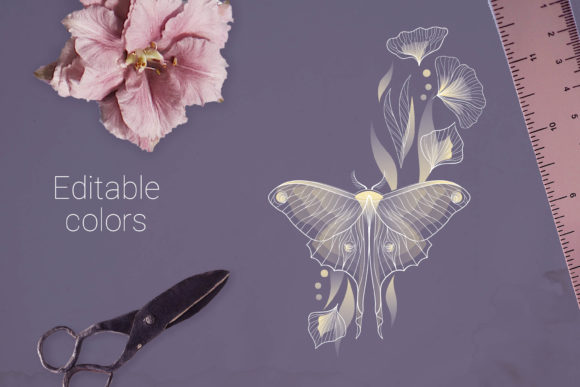
In the world of design assets, few motifs carry the immediate emotional weight of the butterfly. It signals transformation, delicacy, and nature, but in a professional context, it is often overused or rendered poorly. This collection of Butterfly Decorative Elements and vector moth botanicals offers a different approach. It moves beyond simple clipart to provide sophisticated, scalable artwork suitable for high-end branding, stationery, and digital media. The distinction here lies in the composition; these are not just isolated insects but integrated design systems featuring floral arrangements and intricate linework.
The visual personality of this set leans heavily toward elegance and organic structure. Unlike standard illustration packs, the inclusion of moth elements adds a layer of vintage, scientific illustration appeal that pairs well with modern trends in editorial design. The outlines are clean and intentional, allowing the artwork to function as a primary focal point or a subtle textural background. Whether you are working on a wedding invitation, a beauty brand’s logo, or a seasonal marketing campaign, the adaptability of these elements is their strongest feature.
Visual Characteristics and Artistic Style
When you look at the anatomy of these Butterfly Decorative Elements, you see a balance between negative space and intricate detail. The vector moth designs, in particular, often feature symmetrical wing patterns that appeal to a sense of order and balance. The botanical components—leaves, vines, and flowers—are drawn to complement the curvature of the wings rather than fighting for attention. This creates a cohesive visual language that feels organic.
The style is versatile. It can lean toward a handwritten font aesthetic if paired with a script font, or it can look sharp and contemporary when used alongside a sans serif font. Because the files are vector-based, the "line weight" is a critical factor. These outlines are typically designed with varying stroke weights to simulate depth. This prevents the design from looking flat or "sticker-like," which is a common issue with lower-quality design assets. The result is artwork that feels hand-drawn yet precise enough for professional packaging design.
Practical Applications for Designers and Creators
For the creative professional, the utility of these elements extends far beyond simple decoration. In logo design, a simplified version of a moth or butterfly can serve as a memorable logomark, especially for businesses in the wellness, beauty, or lifestyle sectors. The key is to reduce the complexity of the vector to ensure it scales down cleanly for social media avatars or favicon sizes.
In editorial design and publishing, these botanical elements shine as chapter headers or margin decorations. They provide a visual break in long-form text, improving the reading experience without disrupting the flow. For web design, these assets can be used to create parallax scrolling effects or subtle background textures. Because they are available in formats with transparency, they layer beautifully over photography or colored backgrounds, adding depth to a layout that a standard display font cannot achieve alone.
Specific Use Cases
- Wedding Stationery: The delicate nature of the butterfly motifs makes them ideal for save-the-dates, envelopes, and menu cards. They pair exceptionally well with script fonts to create a romantic, airy atmosphere.
- Social Media Graphics: For content creators on platforms like Instagram or Pinterest, these elements can frame text overlays. A moth illustration placed in the corner of a quote card adds an artistic touch that elevates the post from generic to curated.
- Merchandise: The vector moth and botanical illustrations work well on tote bags, t-shirts, and mugs. The SVG format ensures that the print quality remains sharp regardless of the product size.
Technical Flexibility: Modifying Your Assets
One of the most significant advantages of this collection is the file compatibility. The availability of .svg, .eps, and .png files means you are not locked into a single software environment. However, the true power lies in the vector formats.
Using Adobe Illustrator, you have total control over the color palette. This is vital for brand identity. If a client has a specific hex code for their brand colors, you can instantly apply it to the outlines and fills of the butterfly wings. You can also deconstruct the elements. Perhaps you only like the antenna of a moth or a specific leaf cluster. With vector editing, you can isolate these parts to create custom patterns or borders. This level of customization is what separates a "stock" look from a bespoke design.
Integrating Elements with Typography
A common challenge in design is balancing decorative artwork with legible text. Butterfly Decorative Elements require a thoughtful approach to font pairing. Because the illustrations are often detailed, they can overwhelm a serif font or a modern typography face with too many thin strokes.
A practical recommendation is to use a premium font with a heavier weight to anchor the design. For example, a bold geometric sans serif font creates a striking contrast against the organic, flowing lines of the botanical vectors. Conversely, if the goal is a vintage or ethereal look, a handwritten font with natural imperfections can mimic the organic feel of the moth illustrations. The goal is visual hierarchy; the typography should deliver the message, while the butterflies provide the mood.
Evaluating Fit and Commercial Use
Before committing to these creative font and asset pairings, it is essential to evaluate the project's needs. Ask yourself if the style of the moth aligns with the brand's voice. A dark, detailed moth might suit a gothic or vintage brand, while a light, airy butterfly outline fits a spring collection or a yoga studio.
When reviewing the files, test the .png files on different colored backgrounds to ensure the contrast is sufficient. In Adobe Illustrator, check the anchor points of the .eps files. Clean vectors should have minimal anchor points, making them easy to edit and lightweight for web use. Finally, always verify the licensing. For commercial font and asset usage, ensure the license covers your specific distribution method, whether it is print-on-demand merchandise, digital products for sale, or client work. This due diligence protects your business and ensures the artwork enhances rather than hinders your professional reputation.